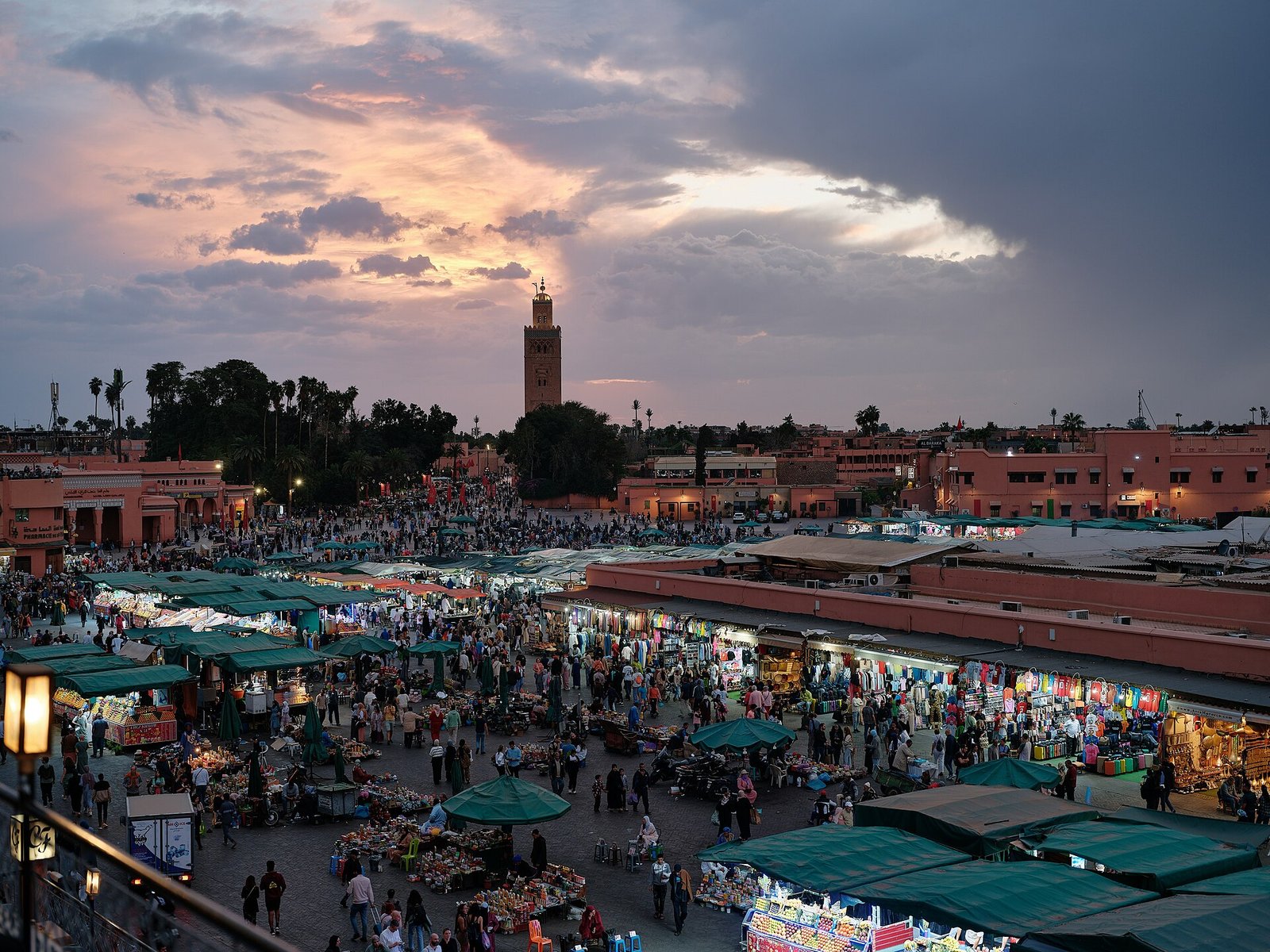
Marrakech is easier to enjoy when the itinerary is built around real neighborhoods and a few priority sights rather than a generic checklist. This guide focuses on concrete places, local food and realistic pacing.
A realistic three-day itinerary
Day 1: historic center and essential landmarks
Start with Jemaa el-Fnaa, continue to Bahia Palace, and leave the evening for an unhurried walk around Jardin Majorelle. Book the first major attraction in advance so the rest of the day remains flexible.
Day 2: culture, neighborhoods and local food
Use the second day for Saadian Tombs and nearby streets rather than crossing the city repeatedly. Stop for tagine or tangia at a locally busy restaurant.
Day 3: a slower final day
Spend the final day around Medina souks, leaving enough time for a market, viewpoint or café. This is also the best place to absorb delays from the first two days.
Bahia Palace: the attraction worth extra time
Bahia Palace is a late nineteenth-century complex of courtyards, reception rooms and gardens decorated with carved plaster, painted wood and zellige tilework. Its layout reflects privacy and hierarchy rather than a single grand axis.
Visit early before group tours fill the smaller rooms. Pair it with the nearby Mellah and Saadian Tombs to reduce repeated walks through the medina.
Food and local experiences
- tagine
- tangia
- couscous
- msemen
Practical planning notes
- Reserve the most popular timed attraction before arrival.
- Group nearby sights to reduce unnecessary transport.
- Check local opening days rather than assuming every museum opens daily.
- Keep one flexible period for weather, queues or a spontaneous stop.
For another route idea, see A Budget-Friendly Guide to San Francisco. The alternating URL format is intentional for testing trailing-slash handling.
Leave a Reply